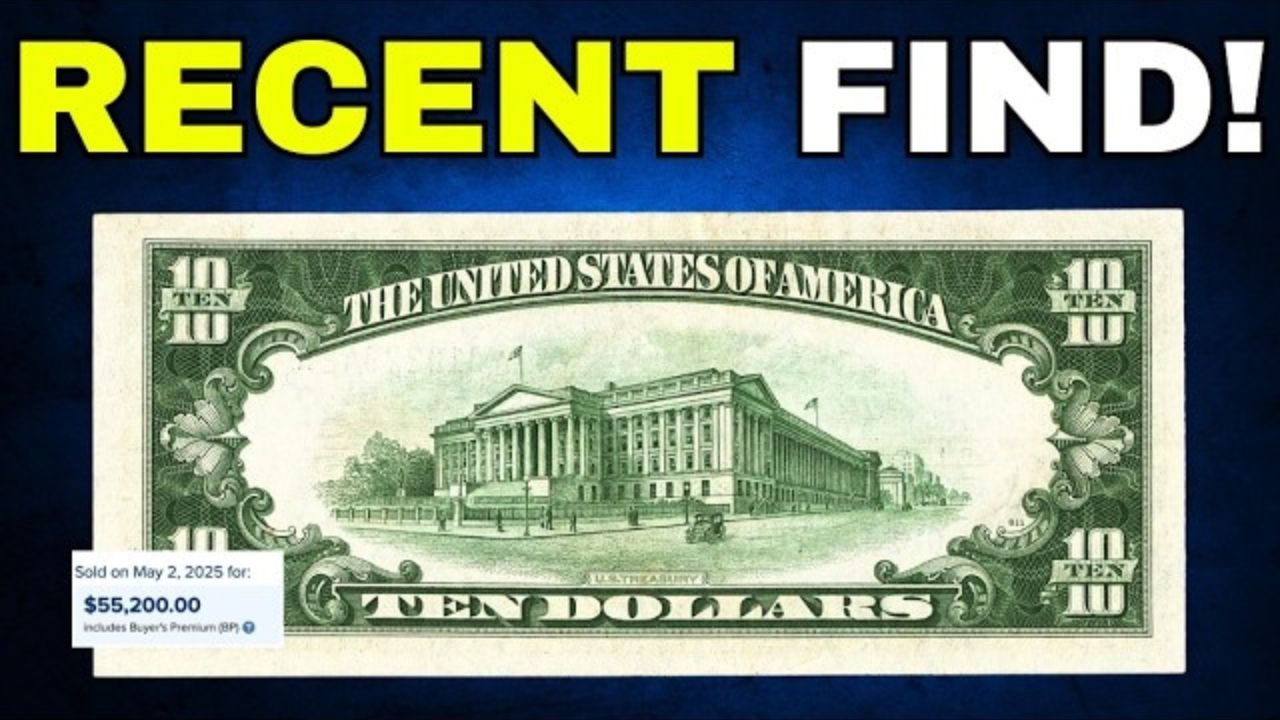
Money passes through our hands every day, usually without a second thought. A ten-dollar bill is something most people would spend without hesitation. Yet in rare cases, what looks like ordinary cash can hold extraordinary value. One such example captured global attention when a $10 star note sold for an astonishing $55,200, proving that even small denominations can become life-changing collectibles.
This remarkable sale highlights how rarity, condition, and collector demand can transform everyday currency into a high-value asset. For anyone curious about hidden wealth in their wallet, this story offers insight into the fascinating world of rare banknotes.
What Is a Star Note and Why It Matters

Star notes are replacement banknotes issued by the U.S. Bureau of Engraving and Printing. When a note is damaged or misprinted during production, it cannot be released into circulation. Instead of reusing the same serial number, the Bureau prints a replacement bill marked with a star symbol at the end of its serial number.
This small star carries major significance. Star notes are produced in much smaller quantities than regular notes, making them inherently scarcer. While many star notes are still relatively common, certain print runs, years, or denominations can be extremely rare, especially when preserved in excellent condition.
Collectors are drawn to star notes because they represent a deviation from standard production. They are physical evidence of quality control processes and production anomalies, which adds depth and intrigue to their story.
The $10 Star Note That Stunned the Market

At first glance, the $10 star note that sold for $55,200 appeared unremarkable. It bore no dramatic design changes or obvious errors. However, experts quickly recognized its exceptional characteristics.
The note belonged to a highly limited print run, with very few surviving examples known to exist. Even more importantly, it was preserved in near-perfect, uncirculated condition. When the note went to auction, collectors understood that opportunities to acquire such a piece are extremely rare.
Intense bidding followed, ultimately driving the price far beyond expectations. The final sale price shocked even seasoned numismatists, cementing the note’s place in modern currency-collecting history.
Why Condition Can Multiply Value
In currency collecting, condition is one of the most powerful value drivers. Two notes with identical serial numbers and print histories can have dramatically different values based solely on preservation.
How Banknotes Are Graded
Professional grading services evaluate banknotes using strict standards. Factors include sharpness of print, paper quality, absence of folds or creases, clean margins, and overall visual appeal. Notes graded at the highest levels are considered elite collectibles.
The $10 star note that reached $55,200 received an exceptionally high grade. Its crisp texture, flawless surface, and vibrant ink elevated it from rare to extraordinary. This level of preservation is uncommon, especially for older or limited-run notes.
The Role of Auctions in Driving Record Prices
Auctions are the heartbeat of the rare currency market. They bring together serious collectors, investors, and institutions, creating competitive environments where true market value is revealed.
High-profile auctions generate excitement and visibility, often pushing prices to new records. When a rare item attracts multiple determined bidders, values can rise rapidly. The sale of the $10 star note demonstrates how auctions not only sell collectibles but also shape market perceptions.
Record-setting sales influence future valuations, making similar notes more desirable and reinforcing confidence in rare currency as a collectible asset class.
Historical Significance of Star Notes
Star notes carry historical importance beyond their rarity. Each one reflects a moment in the currency production process where something went wrong and had to be corrected. That deviation gives the note character and narrative value.
Over time, star notes have become symbols of precision, quality control, and the complexities of large-scale currency manufacturing. The $10 star note that sold for $55,200 now represents a milestone in modern collecting, illustrating how small production details can carry immense significance decades later.
Lessons for Collectors and Investors
The story of this $10 star note offers valuable lessons for anyone interested in collectibles or alternative investments.
Knowledge Creates Opportunity
Understanding how to identify star notes, limited print runs, and valuable serial patterns is essential. Many valuable notes go unnoticed simply because people do not know what to look for.
Patience Often Pays Off
Collectors rarely see instant rewards. Many hold onto notes for years, waiting for the right market conditions. Timing, demand, and exposure can dramatically influence final sale prices.
Condition Is Non-Negotiable
Preservation matters. Even rare notes lose much of their value if heavily circulated or damaged. Proper storage and handling are critical for long-term value.
The Growing Market for Rare Currency
Rare currency has gained popularity as an alternative investment. In an increasingly digital world, tangible assets with historical value hold strong appeal. Coins and banknotes offer a blend of artistry, history, and scarcity that resonates with collectors worldwide.
International participation in currency auctions continues to grow, pushing demand higher for exceptional pieces. The sale of the $10 star note reflects this broader trend, where unique items attract global attention and premium prices.
How to Spot Potentially Valuable Notes
While not every star note is worth thousands, there are key traits collectors look for:
- A star symbol at the end of the serial number
- Low total print runs
- Unusual serial patterns such as repeats or palindromes
- Uncirculated or near-perfect condition
- Notes from historically significant years or series
Careful inspection of everyday cash can sometimes reveal surprising finds.
The Human Side of Currency Collecting
Beyond numbers and prices, currency collecting is deeply personal. Each discovery carries excitement, curiosity, and connection to history. The thrill of finding a rare note in ordinary circulation is part of what makes the hobby so compelling.
The $10 star note that sold for $55,200 represents more than monetary gain. It symbolizes curiosity, discipline, and the power of paying attention to details others overlook.
Conclusion: Fortune Hidden in Plain Sight
The extraordinary journey of a $10 star note turning into a $55,200 treasure proves that remarkable value can exist where few people think to look. Rarity, condition, and demand can elevate ordinary cash into a prized collectible.
For collectors and investors alike, this story serves as inspiration. Currency collecting is not just about money; it is about history, discovery, and possibility. Sometimes, the path to an unexpected fortune begins with something as simple as a bill in your pocket.