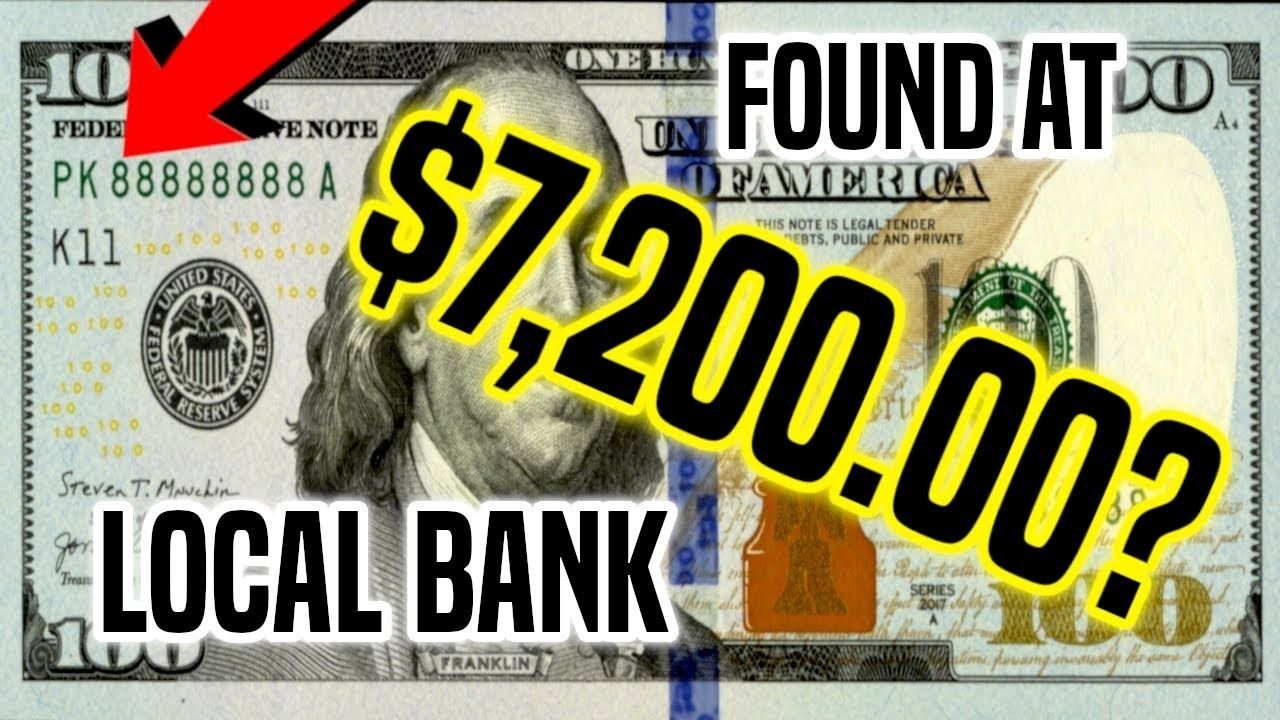
Most people treat a $20 bill as everyday cash, something easily exchanged for groceries, fuel, or a meal on the go. Yet within the specialized world of currency collecting, certain $20 bills have sold for staggering amounts, including one remarkable example valued at $55,200. What separates an ordinary note from a five-figure collectible is not luck alone, but a precise combination of rarity, condition, and unique characteristics that collectors prize.
Paper money, much like rare coins, can carry hidden value that goes far beyond its face denomination. Understanding why some bills become extraordinary is the first step toward recognizing potential treasures in your own hands.
Why Collectors Pay So Much for Rare $20 Bills

Collectors are driven by scarcity, history, and visual uniqueness. When a bill deviates from standard production in a meaningful way, it becomes more than currency. It becomes an artifact.
Rarity and Limited Survival
A bill that exists in very small numbers instantly attracts attention. Some rare $20 bills were printed in limited quantities, while others survived only because a few escaped destruction during quality control. The fewer examples known to exist, the higher the demand among collectors.
Condition and Preservation
Condition is critical. A crisp, uncirculated $20 bill with sharp corners, clean paper, and vibrant ink can be worth many times more than a worn example of the same note. High-grade notes are especially valuable because paper currency is easily damaged over time.
Historical and Visual Appeal

Bills tied to specific historical periods, printing experiments, or discontinued designs often carry added prestige. Intricate artwork, unusual layouts, or bold printing errors make a bill visually compelling and desirable.
The $55,200 $20 Bill Explained
The $20 bill that reached a valuation of $55,200 was not special because of its denomination, but because of its extraordinary characteristics. It featured a rare and dramatic printing error combined with excellent preservation. Only a very small number of similar notes were ever discovered, making it a centerpiece for serious collectors.
When such a bill appears at auction, competition can be intense. Collectors recognize that opportunities to acquire notes of this caliber are rare, and bidding can escalate quickly. The final price reflects both the bill’s scarcity and the enthusiasm of buyers who understand its significance.
Features That Can Make a $20 Bill Valuable
Not every valuable bill looks unusual at first glance. Some of the most desirable traits are subtle and easy to overlook.
Unusual Serial Numbers
Serial numbers play a major role in collectibility. Patterns such as repeating digits, ladders, palindromes, or extremely low numbers can significantly increase value. Star notes, which replace defective bills, are also popular due to their limited print runs.
Printing Errors and Production Anomalies
Printing errors are among the most sought-after features in collectible currency. These can include misaligned seals, missing ink, inverted elements, or double impressions. The more obvious and dramatic the error, the more attractive it becomes to collectors.
Series Year and Design Type
Older series, especially those no longer in production, often carry higher value. Design changes, signature combinations, and short-lived printings can all contribute to rarity.
Overall Condition
Even the rarest bill loses value if it is heavily worn, creased, or stained. Preservation is essential in determining whether a note qualifies as a high-end collectible.
How Auctions Shape Currency Values
Auctions are the primary marketplace for rare paper money. When a unique $20 bill is offered publicly, collectors from around the world compete for ownership. This competition often drives prices far beyond initial estimates.
Market trends also influence results. At certain times, demand for error notes, star notes, or specific denominations surges, pushing values higher. A bill that might sell modestly one year could command a premium the next as collector interests evolve.
Real-Life Discoveries That Changed Lives
Stories of ordinary people discovering valuable bills are surprisingly common. Some find rare notes in old collections inherited from relatives. Others receive unusual bills from banks or ATMs without realizing their significance.
These discoveries fuel the excitement of currency collecting. They highlight the idea that remarkable value can exist in everyday objects, waiting for someone observant enough to notice.
Why Professional Appraisal Matters
If you believe you have a valuable $20 bill, professional appraisal is essential. Currency experts can authenticate the note, identify rare features, and assess condition accurately. This protects you from undervaluing a potentially significant asset.
Professional grading services also assign standardized grades that collectors trust. A high-grade certification can dramatically increase a bill’s market appeal and final sale price.
Preserving a Potentially Valuable $20 Bill
Preservation is just as important as discovery. Improper handling can quickly reduce a bill’s value.
Best Practices for Storage
- Store the bill in a protective, acid-free sleeve
- Keep it in a stable, dry environment away from sunlight
- Avoid folding or carrying it in a wallet
- Handle it as little as possible, and only by the edges
Proper care ensures that condition, one of the most important value factors, is maintained over time.
The Broader Appeal of Collectible Paper Money
The $20 bill example is part of a much larger and fascinating field. Collectible currency spans centuries of economic history, design evolution, and technological change. From emergency wartime issues to experimental printings, each note reflects the era in which it was created.
Many collectors are drawn to paper money because of its artistry and storytelling. Portraits, seals, and intricate engravings turn each bill into a compact historical document.
Why Checking Your Wallet Is Worth It
While most $20 bills are worth exactly $20, rare exceptions exist. Taking a moment to examine serial numbers, alignment, and overall appearance can be surprisingly rewarding. Even if you never find a five-figure note, discovering a bill with modest added value can spark a deeper interest in collecting.
Currency collecting combines education, history, and the thrill of discovery. It rewards curiosity and attention to detail in a way few hobbies can.
Conclusion
The story of a $20 bill valued at $55,200 is a powerful reminder that extraordinary value can hide in ordinary places. Rarity, condition, and unique features transform simple paper money into coveted collectibles.
Before spending or dismissing a $20 bill, take a closer look. That seemingly routine piece of currency might hold a story, and a value, far greater than you ever expected.