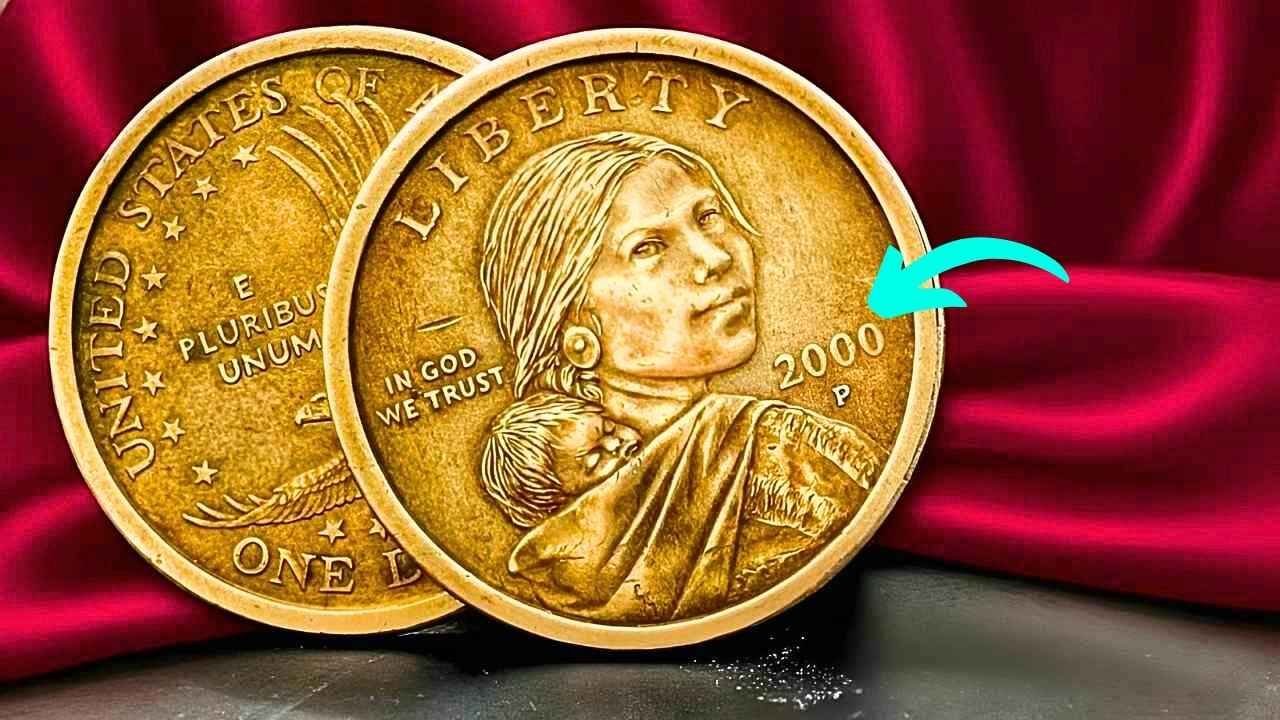
The 2000-P Sacagawea Dollar represents one of the most important turning points in modern U.S. coinage. Introduced at the dawn of the new millennium, it was designed to replace the Susan B. Anthony dollar and renew public interest in one-dollar coins. Featuring Sacagawea, the Shoshone woman who guided the Lewis and Clark expedition, the coin blends historical tribute with modern minting innovation. While hundreds of millions were produced, a small number of rare varieties and errors from the 2000-P issue have become some of the most valuable modern U.S. coins ever discovered.
For collectors in 2026, the 2000-P Sacagawea Dollar remains a compelling combination of history, rarity, and investment potential.
Origins of the Sacagawea Dollar

The U.S. Mint launched the Sacagawea Dollar in 2000 using a distinctive golden-colored manganese brass alloy. The obverse, designed by Glenna Goodacre, depicts Sacagawea carrying her infant son, Jean Baptiste, symbolizing guidance, resilience, and exploration. The reverse features a soaring eagle encircled by seventeen stars, representing the states in the Union at the time of the Lewis and Clark expedition.
The Philadelphia Mint, identified by the “P” mintmark, produced the majority of these coins. Although most were intended for circulation, early production runs and experimental dies led to rare variations that now define the coin’s legendary status among collectors.
Why the 2000-P Issue Is So Important
The 2000-P Sacagawea Dollar is special for two key reasons: it was the first year of issue, and it coincided with experimental production phases at the Mint. First-year coins often attract long-term collector interest, but in this case, the presence of extraordinary errors elevated the series far beyond typical modern coinage.
These rare pieces are not simply mistakes. They are artifacts of transition, reflecting a moment when the Mint was refining designs, testing dies, and launching a new national symbol.
The Most Rare 2000-P Sacagawea Dollar Varieties
The Cheerios Dollar
The most famous and widely recognized rarity is the Cheerios Dollar. In a 1999 promotional campaign, the U.S. Mint partnered with General Mills to include Sacagawea Dollars in select Cheerios cereal boxes. Approximately 5,500 coins were distributed.
What makes these coins extraordinary is the reverse design. The Cheerios Dollar features enhanced eagle tail feathers, with sharper detail and deeper relief than standard circulation strikes. This reverse was a prototype design that never entered mass production.
Because of their limited distribution and unique design, authenticated Cheerios Dollars can sell for several thousand dollars. High-grade certified examples have achieved five-figure prices at auction.
Mule Error Coins
The most valuable 2000-P Sacagawea Dollars are mule errors. A mule occurs when mismatched dies are paired together during striking. In this case, a Washington Quarter obverse was mistakenly combined with a Sacagawea Dollar reverse.
The result is one of the most dramatic modern U.S. coin errors ever discovered. Only a few dozen examples are known to exist. These coins regularly sell for $50,000 or more, with top examples exceeding that figure depending on condition and certification.
Double Die Errors
Double die errors occur when the die itself carries a doubled design, causing letters or design elements to appear duplicated on the coin. Some 2000-P Sacagawea Dollars show doubling in the lettering, date, or details of Sacagawea’s portrait.
These errors are far rarer than typical circulation coins but more accessible than mule errors. Depending on clarity and grade, double die Sacagawea Dollars can range from several hundred dollars to several thousand dollars.
Off-Center Strikes and Other Errors
Other collectible errors include off-center strikes, clipped planchets, broadstrikes, and weak or missing edge lettering. These errors vary widely in appearance and value. Coins with dramatic visual impact and clear dates tend to command higher prices.
While these errors are not as famous as the Cheerios or mule varieties, they remain highly desirable within the error-coin community.
How to Identify Rare 2000-P Sacagawea Dollars
Careful inspection is essential when searching for rare varieties. Collectors should look closely at the eagle’s tail feathers, as enhanced detail is the defining feature of the Cheerios Dollar. Any mismatch between obverse and reverse designs immediately signals a potential mule error.
Doubling in lettering or facial features may indicate a double die variety, while incomplete or misaligned designs suggest strike errors. Magnification, proper lighting, and comparison with known examples are critical tools.
Professional authentication and grading are strongly recommended, as rare Sacagawea Dollars are frequently counterfeited or misidentified.
Value of Rare 2000-P Sacagawea Dollars in 2026
Market values vary dramatically depending on rarity and condition. Cheerios Dollars typically sell for $3,000 to over $10,000, with top-grade examples commanding even higher prices. Mule error coins remain among the most valuable modern U.S. coins, often selling for $50,000 to $100,000 or more.
Double die errors generally range from $500 to several thousand dollars, while off-center and strike errors often sell for a few hundred dollars depending on severity. Certification by respected grading services significantly increases buyer confidence and market value.
Collecting and Long-Term Appeal
For collectors, the 2000-P Sacagawea Dollar offers both excitement and historical depth. While most examples are common and worth face value, the possibility of discovering a rare variety keeps collectors searching through rolls, attending coin shows, and studying diagnostics.
These coins appeal to both traditional numismatists and modern collectors who appreciate contemporary history and design innovation.
Market Trends and Investment Outlook
In 2026, demand for rare modern U.S. coins remains strong. The Sacagawea Dollar occupies a unique position as a modern issue with legendary rarities. Mule errors and Cheerios Dollars continue to perform exceptionally well at auction, while smaller errors maintain steady appreciation.
As interest in modern coinage grows and supplies remain fixed, the long-term outlook for rare 2000-P Sacagawea Dollars remains positive, especially for certified high-grade examples.
Final Thoughts
The 2000-P Sacagawea Dollar is far more than a circulating coin. It is a symbol of cultural recognition, artistic innovation, and one of the most fascinating chapters in modern U.S. numismatics. Rare varieties such as the Cheerios Dollar and mule errors have transformed this issue into a cornerstone of contemporary coin collecting.
Whether pursued for historical appreciation or investment potential, the most rare 2000-P Sacagawea Dollars continue to captivate collectors worldwide, proving that even modern coins can hold extraordinary value and enduring legacy.