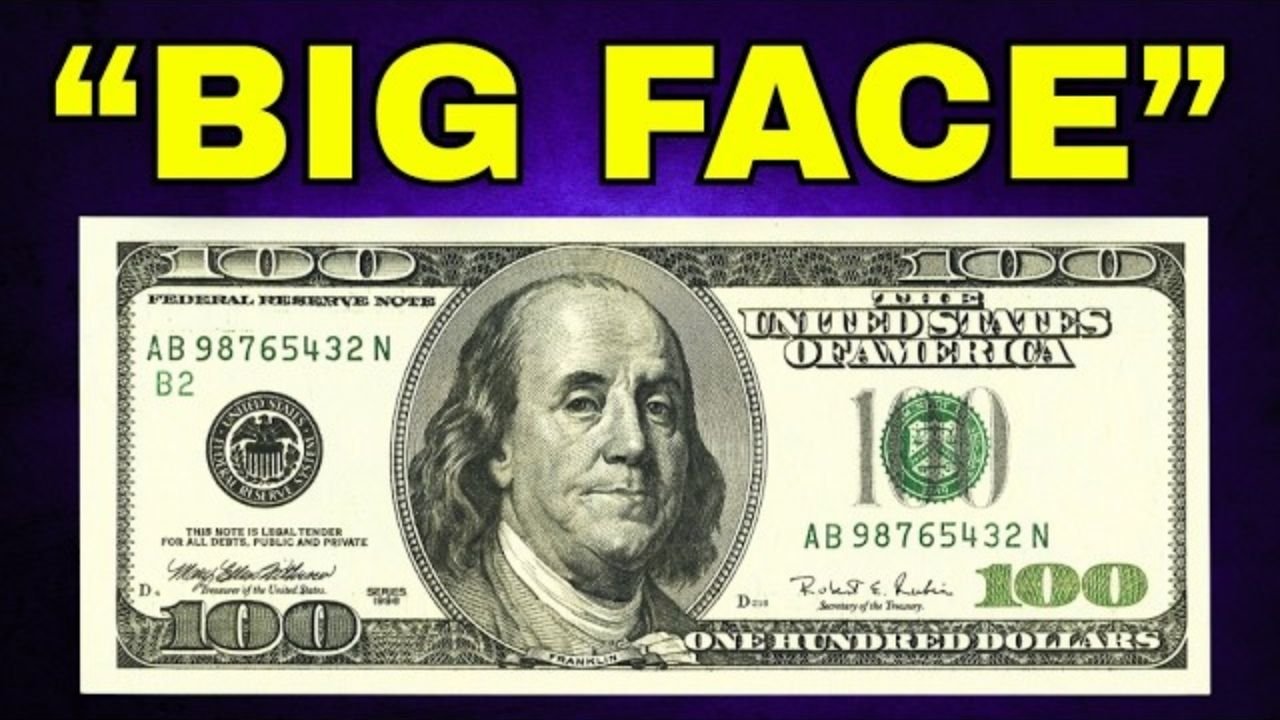
Most people treat paper money as a simple tool for everyday transactions. You receive it, spend it, and rarely give it a second thought. However, when it comes to the $100 bill, that habit can cost you. This denomination is not only one of the most counterfeited notes in circulation, but it can also carry hidden collectible value. Depending on its series, condition, serial number, or printing errors, a $100 bill may be worth far more than its face value. Taking a moment to examine each note before spending it can protect you from fraud and help you uncover unexpected financial value.
The History and Prestige of the $100 Bill
Why Benjamin Franklin Defines the Note
The $100 bill has long symbolized wealth and status. Featuring Benjamin Franklin, a founding figure in American history, the note reflects intellect, diplomacy, and innovation rather than political power. Since its introduction in the 19th century, the $100 bill has undergone numerous redesigns to improve durability and security.

Early versions were larger and richly detailed, appealing strongly to collectors today. Over time, the bill transitioned into the smaller, modern format used today. Older series, especially those preserved in excellent condition, often command significant premiums in the collector market.
How Redesigns Shaped Modern Currency
Each redesign of the $100 bill was driven by the need to stay ahead of counterfeiters. Advanced inks, embedded threads, and complex imagery were introduced to protect the integrity of the currency. These design changes also created distinct series, some of which are now highly desirable to collectors due to limited availability.
Key Security Features Every Person Should Know
Modern $100 bills include some of the most advanced security features found in U.S. currency. Familiarity with these elements helps verify authenticity quickly and confidently.
The blue 3D security ribbon is woven directly into the paper, not printed on the surface. When tilted, images of bells and numbers appear to move. The color-shifting ink on the large numeral in the lower right corner changes from copper to green depending on the viewing angle. A watermark of Benjamin Franklin becomes visible when the bill is held up to light, along with a security thread embedded vertically within the paper.
These features are difficult to replicate perfectly, making them reliable indicators of authenticity.
Why Counterfeit $100 Bills Remain a Serious Risk
The $100 bill is one of the most targeted denominations for counterfeiters because of its high value and widespread acceptance. Businesses and individuals who unknowingly accept counterfeit notes often face financial loss, as banks will not reimburse fake currency once it enters the system.
For individuals, passing along a counterfeit bill can lead to uncomfortable situations or legal scrutiny. A quick inspection before accepting or spending a $100 bill significantly reduces these risks and helps maintain confidence in cash transactions.
The Hidden Collectible Value of $100 Bills
What Makes One Note Worth More Than Another
Not all $100 bills are equal. Certain characteristics can transform an ordinary note into a valuable collectible. Star notes, issued as replacements for damaged bills during production, are particularly desirable. Low serial numbers, repeating patterns, or symmetrical sequences also attract collector interest.
Bills from discontinued series, especially those in uncirculated condition, often sell for well above face value. In some cases, collectors pay hundreds or even thousands of dollars for a single $100 note with the right combination of rarity and condition.
Why Serial Numbers Matter
Serial numbers are more than just identifiers. Collectors look for unique patterns such as repeating digits, ladders, or palindromes. Even a single star symbol at the end of a serial number can dramatically increase a bill’s desirability. Checking the serial number is one of the simplest ways to spot potential value.
Condition Plays a Critical Role in Value
Condition is one of the most important factors in determining the value of collectible currency. A crisp, uncirculated $100 bill with sharp corners and bright ink is far more valuable than a heavily circulated note.
Professional grading services evaluate paper money based on paper quality, color, sharpness, and overall appearance. Even minor folds or stains can reduce a bill’s market value significantly. For collectors, condition often determines whether a note is worth slightly more than face value or many times over.
Rare Printing Errors That Command High Prices
Printing errors add another layer of fascination to the $100 bill market. Errors such as misaligned seals, missing security threads, inverted serial numbers, or mismatched print elements can turn a standard note into a rarity.
These errors are uncommon, which is why collectors are willing to pay substantial premiums for them. Some error notes have sold for thousands of dollars at auction, proving that careful inspection can yield impressive rewards.
The Global Importance of the $100 Bill
The $100 bill plays a major role beyond U.S. borders. It is widely used internationally as a store of value, particularly in regions with unstable currencies. In fact, a significant portion of all $100 bills circulate outside the United States.
This global demand increases the note’s exposure to counterfeiting while also reinforcing its importance in global finance. The international role of the $100 bill is one reason the U.S. Treasury continues to invest heavily in security innovation.
How to Check a $100 Bill in Under a Minute
Verifying a $100 bill does not require special tools or expertise. A simple routine is enough:
Hold the bill up to light to check the watermark and security thread. Tilt it to observe the color-shifting ink and the movement of the 3D security ribbon. Feel the raised printing with your fingers. Finally, examine the serial number for unusual patterns or star symbols.
This quick process takes less than a minute and can protect you from fraud while helping you identify potential collectible value.
Real Stories of Hidden Value
Many collectors discovered valuable notes by chance. Some received a rare $100 bill as change, only to later learn it was worth several times its face value. Others found star notes or unusual serial numbers tucked away in old wallets or family collections.
These stories highlight an important truth: valuable currency is not always locked away in vaults or museums. Sometimes, it is hiding in plain sight.
Why Awareness Matters for Businesses
Businesses that handle cash regularly face increased risk if employees are not trained to recognize authentic currency. Teaching staff how to identify security features reduces losses and builds customer trust. While detection tools are helpful, awareness remains the strongest defense against counterfeit bills.
Final Thoughts
The $100 bill is far more than a piece of paper. It is a high-value transaction tool, a global store of wealth, and a potential collectible with hidden worth. By developing the habit of checking every $100 note before spending it, you protect yourself from counterfeit losses and open the door to unexpected discoveries.
The next time you hold a $100 bill, pause for a moment. What looks ordinary at first glance could be far more valuable than you ever imagined.