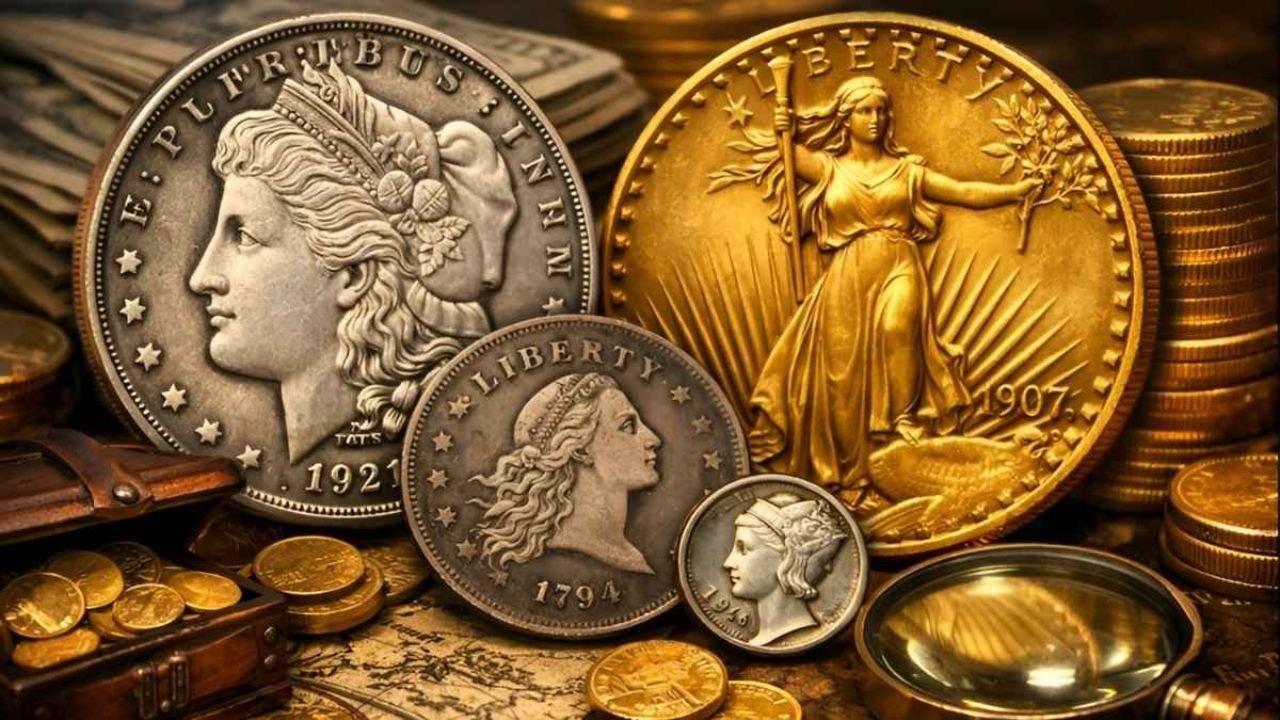
Rare coins occupy a unique space where history, art, and wealth intersect. They are tangible links to past civilizations, economic systems, and moments that shaped the world. In 2026, rare coin collecting continues to thrive as both a passion and a serious investment avenue. From legendary U.S. issues to globally significant ancient coins, collectors are paying millions to own pieces that few others ever will.
Why Rare Coins Are Worth Millions
The extraordinary value of rare coins is driven by a precise combination of factors. Scarcity is the foundation, as coins produced in limited numbers or lost to history naturally become more desirable. Historical relevance adds depth, especially when a coin is tied to war, political change, or the birth of a nation.

Condition plays a decisive role. Coins preserved in near-perfect or mint-state condition can be worth exponentially more than similar examples showing wear. Finally, collector demand fuels competition. When elite collectors pursue the same coin, prices can escalate rapidly, often reaching record-breaking levels at auction.
The Role of Auctions in the Rare Coin Market
Auctions remain the central marketplace for rare coins worth millions. Leading auction houses attract collectors, institutions, and investors from across the globe, creating intense bidding environments. These events establish market benchmarks and often redefine what is considered possible for a coin’s value.
In 2026, high-profile auctions continue to generate headlines as historic coins change hands for staggering sums. Beyond sales, auctions also validate rarity, provenance, and authenticity, further strengthening a coin’s long-term value.
Iconic Rare Coins That Continue to Dominate
The 1933 Double Eagle

Few coins are as famous as the 1933 Double Eagle. Although minted, most were never officially released, and their complex legal history has only enhanced their mystique. Today, this gold coin stands as one of the most valuable and recognizable pieces in U.S. numismatics.
The 1794 Flowing Hair Silver Dollar
Often regarded as the first silver dollar issued by the United States, the 1794 Flowing Hair Silver Dollar represents the beginning of federal coinage. Its rarity, age, and symbolic importance have placed it among the most valuable coins ever sold.
Modern Coins Worth Millions
While ancient and early American coins dominate traditional collecting, modern coins are increasingly entering the million-dollar category. Limited-edition issues, experimental strikes, and coins with unique minting characteristics have gained serious attention.
In 2026, select modern coins demonstrate that rarity is not limited by age. Exceptional design, extremely low mintage, and flawless preservation can propel contemporary coins into elite investment territory.
Global Rare Coins in High Demand
Rare coin collecting is no longer centered on a single country. Global interest continues to expand, with collectors actively pursuing coins from diverse cultures and eras.
Ancient and Classical Coins
Coins from ancient Rome, Greece, and Byzantium remain highly prized for their artistry and historical importance. These pieces offer insight into early economies and imperial power structures.
Asian and Middle Eastern Rarities
In recent years, coins from Chinese dynasties and India’s Mughal period have seen significant growth in demand. Their scarcity, craftsmanship, and cultural relevance have made them standout assets in international collections.
The Importance of Professional Grading and Certification
Grading is essential in determining a rare coin’s value. Professional grading services evaluate coins based on strike quality, surface preservation, and overall eye appeal. Even small differences in grade can translate into vast differences in price.
Certification also protects buyers by confirming authenticity and preventing counterfeit coins from entering the market. In 2026, professionally graded and certified coins remain the gold standard for serious collectors and investors.
Rare Coins as Long-Term Investments
Rare coins are increasingly viewed as alternative investments with strong long-term potential. Unlike paper assets, coins offer tangible ownership and intrinsic value tied to metal content and historical significance.
Many high-net-worth individuals include rare coins in diversified portfolios as a hedge against inflation and market volatility. In 2026, the stability and resilience of the rare coin market continue to attract financially sophisticated investors.
The Stories That Elevate Coin Value
Every rare coin carries a narrative that enhances its appeal. Some were minted during wars, others during economic booms or political transitions. Certain coins were recalled, altered, or quietly removed from circulation, making surviving examples exceptionally rare.
Collectors often value these stories as much as the physical coin itself. The emotional connection to history adds depth, meaning, and prestige to ownership.
Challenges in Rare Coin Collecting
Despite its rewards, rare coin collecting requires diligence. Counterfeiting has grown more sophisticated, making expert authentication essential. Market trends can fluctuate, and improper handling or storage can permanently reduce a coin’s value.
Successful collectors rely on trusted dealers, secure storage solutions, and continuous education to protect both passion and investment.
Technology’s Impact on Coin Collecting
Technology has reshaped the rare coin landscape. Online auctions and digital marketplaces allow collectors to participate globally. High-resolution imaging and detailed databases make research faster and more precise.
Emerging technologies, including blockchain-based provenance tracking, are enhancing transparency and trust. In 2026, technology continues to attract younger collectors while strengthening confidence among seasoned experts.
Building a Rare Coin Collection
Building a collection of rare coins worth millions is a journey, not a shortcut. Many collectors begin with accessible pieces, gradually advancing toward rarer and more valuable acquisitions. Education, patience, and networking are essential.
Attending auctions, engaging with numismatic communities, and studying market trends help collectors make informed decisions. The pursuit itself becomes as rewarding as the collection.
Rare Coins as Cultural Heritage
Rare coins serve as cultural artifacts that preserve the economic, political, and artistic history of civilizations. Museums and institutions rely on collectors to help safeguard these pieces for future generations.
In 2026, rare coins continue to function as bridges between the past and present, offering insight into how societies evolved and governed themselves.
The Future of Rare Coin Collecting
The future of rare coin collecting looks strong and dynamic. Global participation is expanding, modern coins are gaining prestige, and technology is increasing accessibility. As awareness grows, rare coins will remain valued not only for their financial worth but for their historical and cultural impact.
Conclusion
Rare coins worth millions in 2026 represent far more than wealth. They embody craftsmanship, legacy, and human history preserved in metal. For collectors and investors alike, these coins offer a unique blend of prestige, passion, and long-term value. The ultimate collector’s guide is not simply about identifying valuable coins, but about understanding their stories, protecting their legacy, and appreciating their place in the world’s shared heritage.