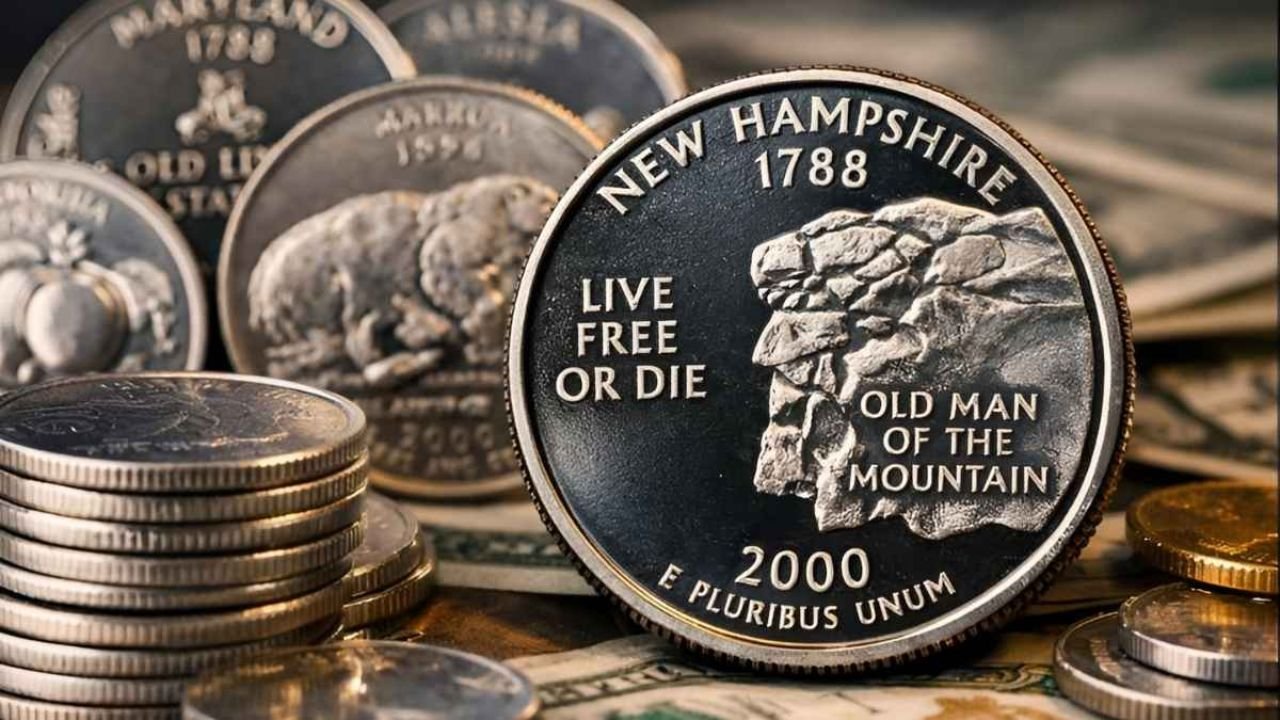
The 50 State Quarters Program, launched by the United States Mint in 1999 and completed in 2008, reshaped modern coin collecting. Each state received a uniquely designed quarter highlighting its heritage, landmarks, and cultural identity. What began as a national celebration quickly evolved into a collecting movement, with millions of people examining everyday change for hidden value. Even in 2026, state quarters remain a dynamic segment of U.S. numismatics, with certain rare varieties commanding impressive prices.
Why Some State Quarters Are Worth Big Money
Not all state quarters are equal in value. The most valuable examples typically share three key traits: rarity, strong collector demand, and exceptional condition. Minting errors such as double strikes, missing layers, or die cracks can create unique coins that were never intended to exist. Limited availability combined with visual distinctiveness often pushes prices far beyond face value. Professional grading further enhances worth, as certified high-grade coins attract serious collectors and investors.
2004 Wisconsin Extra Leaf Quarter
A Modern Error Coin Icon
The Wisconsin quarter is one of the most recognized error coins in the entire series. The design features a cow, cheese wheel, and corn stalk. Some coins were struck with an extra leaf on the corn, resulting in two distinct varieties known as the “Extra High Leaf” and “Extra Low Leaf.”
Market Value in 2026
Depending on condition, these quarters can sell for several hundred dollars, while pristine examples may reach into the thousands. Their clear error and strong collector following make them a cornerstone of state quarter collections.
1999 Delaware “Spitting Horse” Quarter
A Die Crack That Made History
As the first state quarter ever released, the Delaware quarter already holds historical significance. A die crack near the horse’s mouth creates the illusion of the horse spitting, earning the coin its memorable nickname.
Collector Appeal
While not extremely rare, demand remains steady, especially for uncirculated pieces. Its humor, recognizability, and place at the beginning of the program keep it consistently valuable.
2005 Kansas “In God We Rust” Quarter
How a Small Error Created Big Demand
Some Kansas quarters show the motto “In God We Rust” instead of “In God We Trust.” This happened when grease filled part of the die, preventing proper lettering.
Why It’s Worth Money
Collectors value this coin for its unmistakable error and cultural irony. Well-preserved examples can command strong premiums, making it one of the most talked-about modern quarters.
2000 South Carolina Error Strike Quarter
Off-Center and Misaligned Strikes
Certain South Carolina quarters were struck off-center or with alignment errors. These mistakes vary in severity, creating unique coins with individual characteristics.
Value Potential
The more dramatic the error, the higher the price. These quarters are prized for their individuality and visual impact.
2002 Mississippi Double Strike Quarter
A Bold Minting Mishap
Double strike errors occur when a coin is struck more than once. Some Mississippi quarters show clear doubling in the magnolia design or lettering.
What Collectors Pay
These coins often sell for hundreds of dollars, especially when the doubling is strong and the coin is well preserved.
2003 Missouri Quarter Missing Clad Layer
A Rare Structural Error
Some Missouri quarters were struck without their outer clad layer, exposing the copper core beneath. This gives the coin a reddish appearance unlike standard quarters.
Why It’s Highly Valuable
Missing clad layer errors are rare and easily identifiable. Certified examples can command significant premiums in today’s market.
2007 Montana Double Die Quarter
Doubling in Design Details
The Montana quarter features a bison skull and landscape design. In rare cases, doubling appears in lettering or design elements due to a doubled die.
Collector Demand
Uncirculated examples are especially desirable, as clear doubling increases both visual appeal and value.
2008 Arizona Cactus Error Quarter
A Distinctive Design Overlap
The Arizona quarter depicts the Grand Canyon and a saguaro cactus. Some error varieties show the cactus overlapping the state name in an unusual way.
Market Interest
These quarters are scarce and visually striking, making them popular with collectors who value distinctive errors.
2005 Minnesota Extra Tree Quarter
A Subtle but Valuable Variety
The Minnesota quarter shows a wooded lakeside scene. Certain versions appear to have an extra tree caused by die doubling or polishing issues.
Why Collectors Want It
Although subtle, this variety can be worth hundreds of dollars in higher grades and remains a favorite among specialists.
The Importance of Condition and Grading
Condition is often the deciding factor between a modest premium and a major payout. Coins graded in mint state consistently outperform circulated examples. Professional grading services provide authentication, standardization, and market confidence, making them essential for high-value state quarters.
Investment Potential of Rare State Quarters
In 2026, rare state quarters are increasingly viewed as accessible alternative investments. They offer historical significance, tangible value, and strong collector demand. While not without risk, high-quality error quarters can appreciate steadily over time, especially those with clear, dramatic anomalies.
Challenges in Collecting Rare State Quarters
Collectors must remain cautious. Counterfeits and altered coins are a growing concern, and improper storage can permanently damage value. Staying informed, using reputable grading services, and buying from trusted sources are critical for long-term success.
Final Thoughts
State quarters worth big money prove that extraordinary value can still be found in ordinary change. From bold minting errors to subtle design variations, these coins capture history, craftsmanship, and chance in a single piece of currency. In 2026, the fascination with rare state quarters remains strong, offering collectors and investors alike the thrill of discovery and the promise of lasting value.