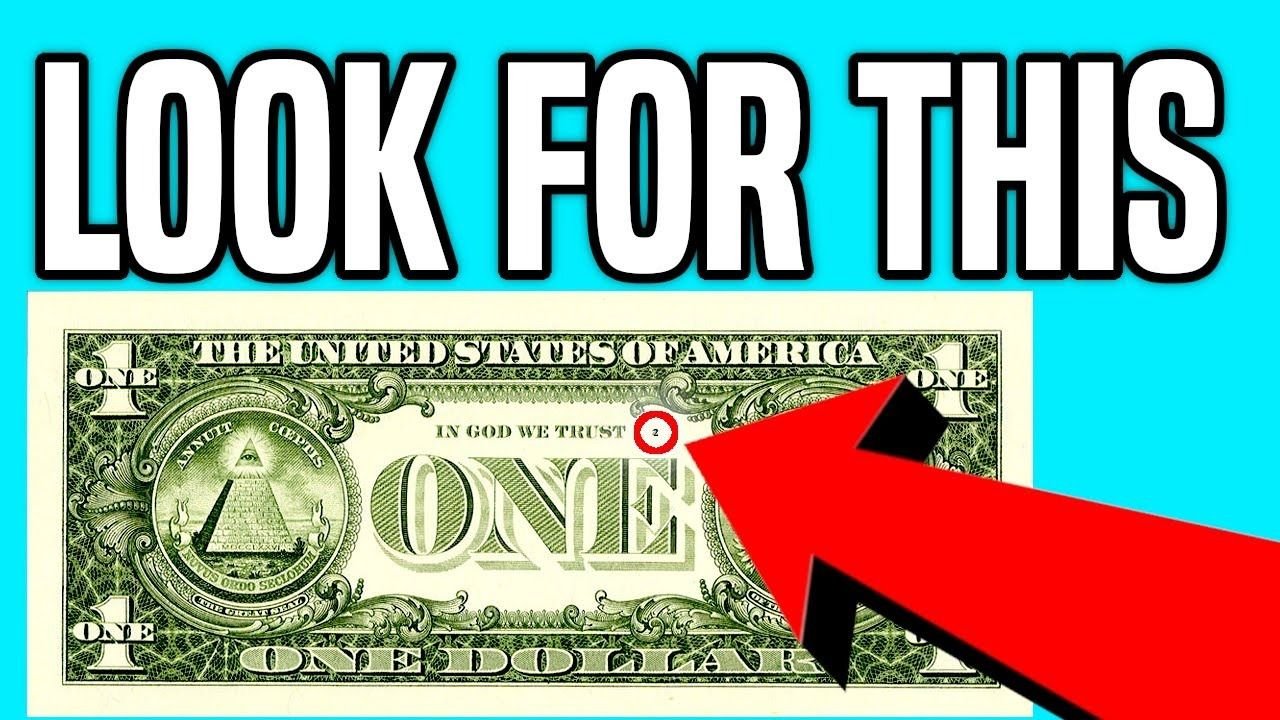
The $1 bill is often dismissed as the most ordinary piece of American currency. It passes through countless hands every day, folded into wallets, dropped into tip jars, or tucked away in drawers. Yet hidden among these everyday notes are ultra-rare $1 bills that collectors are willing to pay thousands of dollars to own. These bills are prized not for their face value, but for their rarity, unique characteristics, and historical importance.
From unusual serial numbers and star notes to dramatic printing errors and early Federal Reserve issues, certain $1 bills have become highly desirable assets in the world of currency collecting. Understanding what makes these notes valuable can turn an overlooked dollar into an unexpected financial surprise.
Why Some $1 Bills Become Extremely Valuable

The value of a rare $1 bill is shaped by a combination of scarcity, condition, and collector demand. Unlike coins, paper currency is more vulnerable to damage, making well-preserved examples especially rare. Small details that seem insignificant to the average person can dramatically increase a bill’s worth.
Collectors focus on originality, printing anomalies, and historical context. When these factors align, a simple dollar can transform into a high-value collectible traded at auctions and private sales worldwide.
Star Notes That Command Premium Prices
Star notes are among the most recognizable rare $1 bills. These notes feature a star symbol at the end of the serial number, indicating they were printed to replace defective bills during production. Because replacement notes are produced in smaller quantities, they are far less common than standard issues.
Certain star notes are exceptionally valuable, especially those from limited print runs or with unique serial patterns. A crisp, uncirculated star note can sell for hundreds, while rare varieties can reach several thousand dollars.
Printing Errors That Collectors Love
Printing errors are some of the most dramatic and valuable examples of rare currency. These mistakes occur when something goes wrong during the printing process, resulting in bills that look visibly different from normal issues.
Highly sought-after error $1 bills include notes with misaligned seals, inverted serial numbers, missing ink, double prints, or mismatched serials. The more obvious and unusual the error, the higher the value. Some extreme error notes have sold for over $10,000 due to their uniqueness.
Low Serial Number $1 Bills
Serial numbers play a major role in determining collectibility. Bills with very low serial numbers, such as 00000001 through 00000010, are especially prized. These notes are often saved immediately after release, making them rare in circulation.
Low serial numbers are appealing because of their rarity and visual simplicity. Collectors view them as status pieces, and high-grade examples frequently sell for thousands of dollars.
Fancy Serial Numbers With Strong Demand
Fancy serial numbers are another popular category among collectors. These include repeating numbers, ladders, palindromes, and patterned sequences. Examples include 11111111, 12345678, or 10000001.
These numbers occur naturally and cannot be intentionally produced on demand, which adds to their appeal. Depending on the pattern and condition, fancy serial number $1 bills can range from a few hundred dollars to several thousand.
Early Federal Reserve $1 Notes
$1 bills issued during the early years of the Federal Reserve system are highly collectible. Notes from the 1920s and 1930s often feature different designs, seal colors, and signature combinations compared to modern currency.
These early notes represent a critical period in U.S. financial history. Well-preserved examples, particularly those with blue or unusual seals, are often valued between $1,000 and $8,000.
Silver Certificates With Collector Appeal
Silver certificates are another category of rare $1 bills that attract strong interest. Issued between the late 1800s and the mid-20th century, these notes were once redeemable for silver.
Although they no longer carry redemption value, their historical significance makes them highly collectible. Rare varieties, star notes, and error silver certificates can command prices well into the thousands.
Unique Seal and Signature Combinations
Some $1 bills are valuable due to rare combinations of Treasury and Federal Reserve signatures. Changes in officials resulted in limited runs of certain signature pairs, making these notes harder to find.
Collectors actively search for short-run signature combinations, especially when paired with high condition or star note status. These bills often sell for significantly more than common issues.
Experimental and Short-Run Printings
Occasionally, the Bureau of Engraving and Printing produced experimental or short-run notes to test paper or printing methods. These bills were never intended for widespread circulation, which makes surviving examples extremely rare.
When authenticated, experimental $1 bills can attract intense interest from advanced collectors and investors, with prices reflecting their scarcity.
The Importance of Condition and Professional Grading
Condition is one of the most critical factors in determining value. Rare $1 bills are graded on a scale that ranges from heavily worn to gem uncirculated. Even a minor crease or stain can significantly reduce value.
Professional grading services authenticate and grade notes, providing confidence to buyers and sellers. A rare bill in pristine condition can be worth several times more than the same bill with visible wear.
How Collectors Find Rare $1 Bills
Many valuable $1 bills are discovered in everyday circulation. Collectors carefully examine serial numbers, seals, and print alignment when sorting through cash. Others focus on purchasing collections, attending auctions, or trading within collector networks.
Knowledge and patience are key. The more familiar someone becomes with valuable traits, the easier it is to recognize a hidden gem.
Investment Potential of Rare $1 Bills
Rare currency has gained attention as an alternative investment. Unlike stocks or digital assets, collectible bills are tangible and tied to historical value. Demand continues to grow as more people enter the hobby.
While not every rare bill guarantees appreciation, well-chosen pieces with strong demand and excellent condition have shown consistent long-term value growth.
Final Thoughts: Look Twice at Every Dollar
The idea that a $1 bill could be worth thousands may sound improbable, but history proves it happens more often than people expect. Star notes, error bills, low serial numbers, and historic issues continue to surface in ordinary places.
Taking a closer look at your cash costs nothing and could reveal something extraordinary. In the world of currency collecting, even the smallest denomination can hold remarkable value.