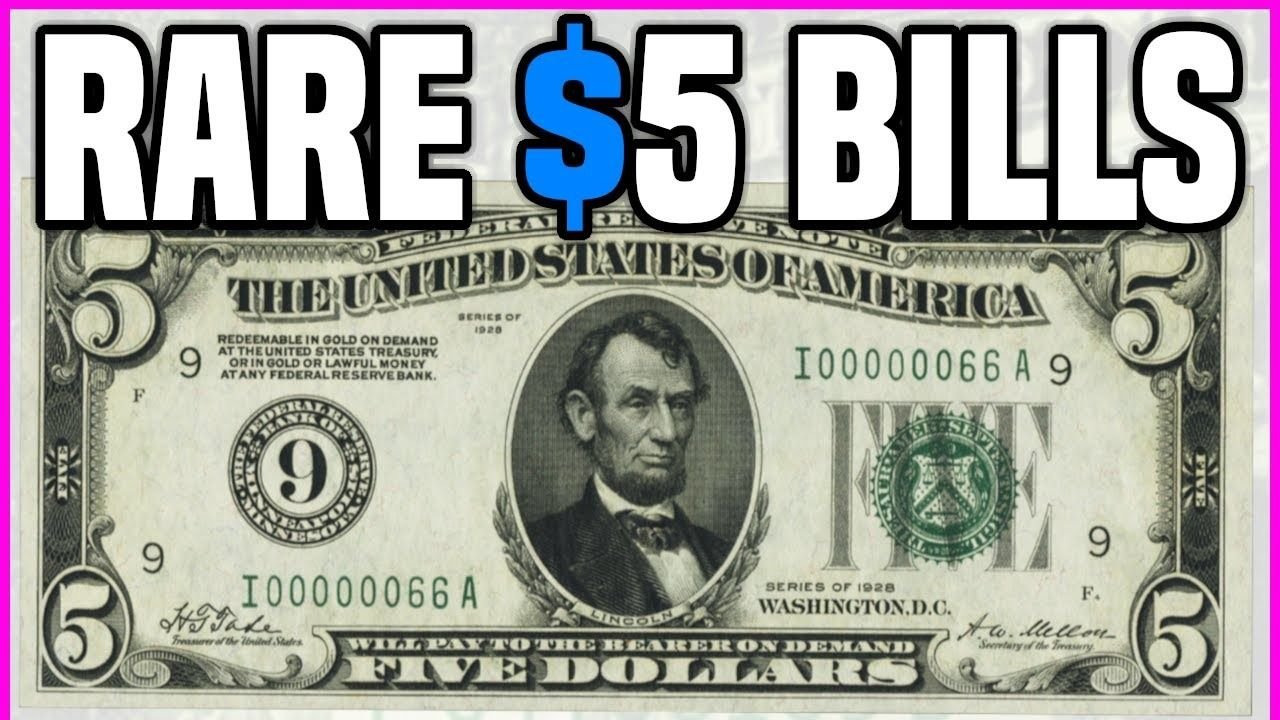
Paper currency may seem ordinary in daily life, yet within the world of collecting, even a simple $5 bill can hold remarkable value. Unlike coins, which often attract attention through age and metal content, paper money tells its story through printing details, serial numbers, and production quirks. Among the most desirable pieces are rare $5 bills featuring misprints and star notes. These notes stand out not only for their visual appeal but also for the insight they provide into how currency is made—and sometimes imperfectly so.
What Makes a $5 Bill Rare
A $5 bill becomes collectible when it differs from the standard notes produced by the Bureau of Engraving and Printing. The U.S. currency printing process is designed for consistency, but occasional deviations occur. These deviations may result in printing errors, or they may involve intentional replacement notes known as star notes.

Rarity is driven by scarcity. When fewer examples of a particular note exist, collectors are willing to pay more, especially when the note is well preserved and visually striking.
Understanding Currency Misprints
Misprints are genuine errors that occur during the printing process. Because quality control removes most flawed notes before they reach circulation, surviving examples are uncommon. The more noticeable the error, the greater the collector interest.
Offset Printing Errors
Offset printing occurs when ink from one side of the bill transfers to the other side, creating faint mirrored or ghost-like images. These errors are visually distinctive and often easy to recognize, making them popular among collectors.
Misaligned or Off-Center Prints
In some cases, the design is printed too far to one side, resulting in uneven margins or portions of the design nearly cut off. Dramatic misalignment increases desirability, particularly when serial numbers and seals remain visible.
Missing Design Elements
Some $5 bills are missing essential features such as serial numbers, Treasury seals, or Federal Reserve seals. These errors are especially valuable because they represent a major failure in the printing process.
Fold-Over and Crease Errors
If the paper folds during printing, parts of the design may be missing or distorted. These errors often produce unique, one-of-a-kind results that collectors appreciate for their individuality.
The Meaning and Importance of Star Notes
Star notes are not errors, but they are still considered rare. When a bill is damaged or misprinted during production, it is removed and replaced with a new note. To track these replacements, the Bureau of Engraving and Printing adds a star symbol at the end of the serial number.
Because replacement runs are much smaller than regular production runs, star notes are inherently scarcer. This limited availability is what makes them appealing to collectors.
Why Star Notes Attract Collectors
Star notes represent an intentional deviation from normal production. They tell a behind-the-scenes story of how currency quality is maintained. Collectors value them for their scarcity, especially when tied to specific series years or low replacement quantities.
How to Identify Rare $5 Bills
Spotting a valuable $5 bill requires careful inspection and patience. Even subtle details can make a difference.
Key Features to Examine
- Serial Numbers: Look for a star symbol at the end of the serial number.
- Alignment: Check margins for uneven spacing or shifted designs.
- Completeness: Confirm that seals, serial numbers, and portraits are present and properly placed.
- Paper Quality: Crisp, uncirculated paper significantly increases value.
- Series Year: Certain years are known for lower star note production or notable errors.
Good lighting and magnification can help reveal details that are easy to miss at first glance.
How Value Is Determined
The value of rare $5 paper money depends on several interconnected factors. No two notes are valued exactly the same, even if they share similar characteristics.
Rarity and Demand
The fewer examples that exist, the more desirable a note becomes. Collector demand plays a major role, especially for visually dramatic misprints or low-run star notes.
Condition and Preservation
Condition is critical. An uncirculated misprint or star note can be worth many times more than a circulated example. Creases, stains, and wear reduce value significantly.
Visual Impact
Errors that are immediately noticeable tend to command higher prices. A missing serial number or bold misalignment is far more appealing than a subtle flaw that requires magnification to see.
Notable Examples From the Market
Over the years, collectors have discovered $5 bills with upside-down seals, missing serial numbers, and heavy ink smears. These notes often become highlights at auctions, drawing strong competition from buyers.
Certain star notes from limited replacement runs have also gained attention, particularly when tied to specific Federal Reserve districts or low serial number ranges. Auction records show that pristine examples can sell for hundreds of dollars, depending on demand.
Why Collectors Value These Notes
Beyond financial value, misprints and star notes offer something deeper. They represent imperfections in a system built for precision. Each note tells a story of production, inspection, and correction.
For collectors, owning such a note is about more than profit. It is about history, uniqueness, and the thrill of discovery. Finding a rare $5 bill in circulation adds an element of excitement that few other hobbies can match.
Tips for New Collectors
Entering the world of paper money collecting does not require large investments, but it does require knowledge.
Practical Advice
- Start by learning to identify star notes, as they are more accessible than major misprints.
- Study auction results to understand realistic market values.
- Store notes in protective sleeves to preserve condition.
- Handle bills carefully to avoid creases or stains.
Patience and education are essential. Valuable notes are uncommon, but informed collectors improve their chances of success.
The Future of Rare $5 Bill Collecting
As printing technology advances, the likelihood of dramatic errors continues to decline. This makes existing misprints increasingly valuable over time. Star notes will remain part of modern currency production, but their limited numbers ensure ongoing interest.
The future of collecting lies in balancing historical finds with modern discoveries. Collectors who appreciate both will build collections that are diverse, resilient, and meaningful.
Final Thoughts
Rare $5 paper money offers a fascinating blend of history, craftsmanship, and chance. Misprints showcase human and mechanical imperfections, while star notes highlight the careful systems designed to maintain quality. Together, they create a compelling area of collecting that appeals to both beginners and seasoned enthusiasts.
By learning how to identify these notes and understanding what drives their value, collectors can turn everyday currency into lasting assets. Sometimes, the most valuable discoveries are already in your wallet, waiting to be noticed.