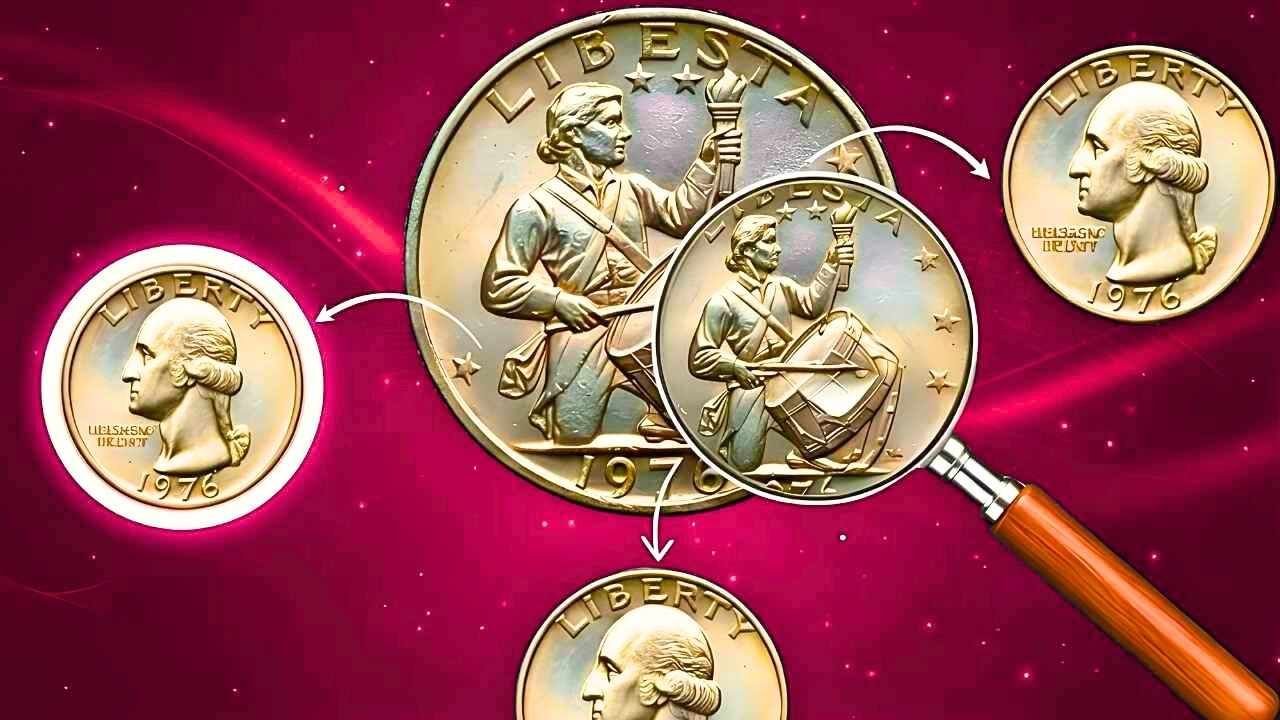
The 1976 Bicentennial Quarter occupies a unique position in American coinage. Issued to celebrate the 200th anniversary of the United States, it is instantly recognizable for its colonial drummer reverse and dual date “1776–1976.” While hundreds of millions of these quarters were minted and circulated widely, a small number were struck with minting errors. These imperfections transformed ordinary pocket change into highly collectible coins with surprising market value.
For collectors and investors alike, Bicentennial Quarter error coins offer a compelling blend of history, rarity, and visual intrigue. Understanding how these errors occurred, how to identify them, and what they are worth can unlock hidden value in an otherwise familiar coin.
The Historical Significance of the Bicentennial Quarter

In the mid-1970s, the United States Mint redesigned the quarter, half dollar, and dollar to commemorate the nation’s bicentennial. Unlike traditional commemorative coins, these designs were released into general circulation, ensuring widespread public engagement with the celebration.
The Bicentennial Quarter was minted at Philadelphia, Denver, and San Francisco. While most examples were struck correctly, the enormous production volume increased the likelihood of mechanical mistakes. These errors, unnoticed at the time, are now prized for their rarity and their connection to a landmark moment in American history.
Why Error Coins Attract Strong Collector Demand
Error coins appeal to collectors because no two are exactly alike. Each represents a moment when the minting process failed to follow its precise standards. In a series as historically meaningful as the Bicentennial Quarter, errors add an extra layer of desirability by combining patriotic symbolism with genuine scarcity.

Values are driven by visibility, severity, condition, and collector demand. The more dramatic and easily identifiable the error, the higher the premium it typically commands.
Most Common 1976 Bicentennial Quarter Errors
Double Die Errors
Double die errors occur when a coin die receives multiple misaligned impressions during its creation. This results in visible doubling on design elements such as lettering, numbers, or imagery.
On Bicentennial Quarters, collectors often inspect the date, “LIBERTY,” “IN GOD WE TRUST,” and details of the drummer on the reverse. Strong, clearly separated doubling is especially valuable and easily recognized even without magnification.
Off-Center Strikes

Off-center strikes happen when the planchet is not properly positioned during striking. The result is a coin where part of the design is missing, while the rest appears shifted.
Mild off-center errors are relatively common and modestly valued, but dramatic examples showing significant blank space while retaining the full date are far more desirable. Visual impact plays a major role in determining value.
Clipped Planchets
A clipped planchet error occurs when the metal blank is improperly cut before striking. This produces a coin with a curved or straight section missing from its edge.
Bicentennial Quarters with clean, well-defined clips are popular among collectors because the error is immediately visible. Larger or multiple clips significantly increase value, especially in higher grades.
Wrong Planchet Errors
Wrong planchet errors are among the rarest and most valuable Bicentennial Quarter mistakes. These occur when a quarter design is struck on a planchet intended for another denomination.
Such coins may appear smaller, thinner, or lighter than a standard quarter. Because of their extreme rarity and clear deviation from normal specifications, wrong planchet Bicentennial Quarters can command substantial premiums at auction.
Die Cracks and Cuds
Die cracks develop when the striking die begins to fracture from repeated use. These cracks appear as raised lines on the coin’s surface. When a portion of the die breaks away entirely, it creates a cud, resulting in a raised blob or missing design area.
While die cracks are relatively common, larger cracks and full cuds are far more collectible. Their value depends on size, placement, and overall eye appeal.
How to Identify Bicentennial Quarter Error Coins
Spotting errors requires careful observation and, in some cases, basic tools. A magnifying glass or digital microscope helps reveal doubling and fine details. Weighing the coin can assist in identifying wrong planchet errors, as deviations from standard weight are strong indicators.
Collectors should closely examine lettering, numbers, and the drummer’s design. Off-center strikes and clipped planchets are often visible without magnification, making them ideal entry points for beginners.
What Bicentennial Quarter Error Coins Are Worth
The value of a 1976 Bicentennial Quarter error coin varies widely based on error type, condition, and market demand.
Double die errors often sell for several hundred dollars, with exceptional examples reaching into the thousands. Off-center strikes range from modest premiums to high three-figure or four-figure values for dramatic misalignments. Clipped planchets commonly sell in the hundreds, while wrong planchet errors are among the most valuable, sometimes exceeding several thousand dollars. Die cracks and cuds typically command lower prices but remain desirable for specialized collectors.
Professional grading and authentication can significantly increase value by confirming legitimacy and preserving condition.
Collecting Strategy and Long-Term Appeal
Bicentennial Quarter error coins are ideal for collectors seeking historical relevance combined with attainable rarity. Some collectors focus on assembling a variety of error types, while others pursue the most dramatic examples available.
Because these coins were produced during a major national celebration, demand remains steady across generations. Their recognizability makes them especially appealing to new collectors, while their scarcity attracts experienced numismatists.
Market Trends and Future Outlook
Interest in error coins has grown steadily as collectors seek unique alternatives to traditional key-date coins. Bicentennial Quarters benefit from strong nostalgia, broad recognition, and enduring historical importance.
As high-quality examples are absorbed into private collections, availability continues to shrink. This trend supports long-term value growth, particularly for authenticated, visually striking errors.
Final Thoughts
The 1976 Bicentennial Quarter is far more than a commemorative design from the past. In error form, it becomes a rare and compelling collectible that blends national history with the intrigue of minting imperfections.
For those willing to look closely, these coins offer the chance to discover significant value in an unexpected place. Whether collected for passion, history, or investment potential, Bicentennial Quarter error coins remain one of the most fascinating chapters in modern American numismatics.