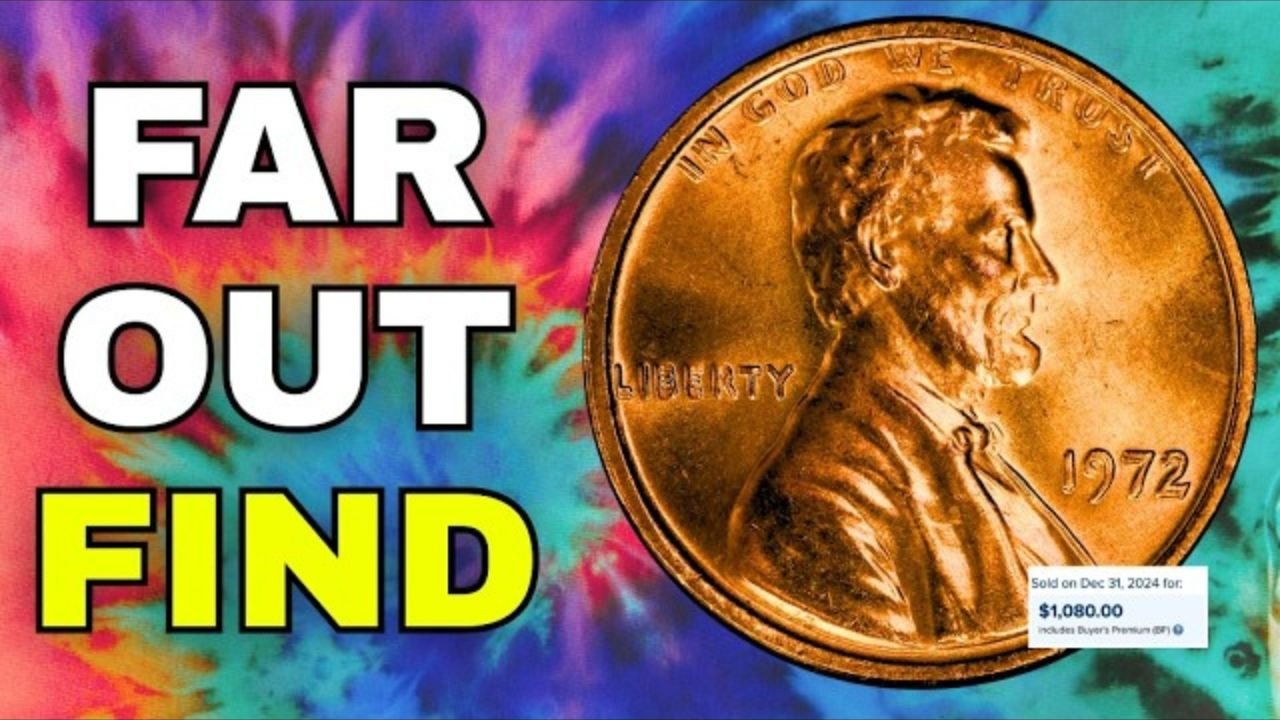
At first glance, a 1972 penny looks like nothing more than spare change. It belongs to the familiar Lincoln Memorial series and has circulated through millions of hands over the decades. Yet hidden within this ordinary cent is one of the most famous and valuable minting errors in modern U.S. coinage. For collectors, the 1972 penny represents a powerful reminder that even everyday coins can hold surprising financial potential.
Understanding why some 1972 pennies are worth far more than one cent requires a closer look at history, minting practices, and the small details that separate common coins from true numismatic treasures.
The Historical Background of the 1972 Lincoln Cent
The 1972 penny is part of the Lincoln Memorial series, minted from 1959 to 2008. The obverse features Victor David Brenner’s iconic portrait of Abraham Lincoln, while the reverse, designed by Frank Gasparro, depicts the Lincoln Memorial. By the early 1970s, this design had become a constant presence in American commerce.
This period was also marked by rising production costs and evolving minting technology. The U.S. Mint was striking enormous quantities of cents to meet demand, increasing the likelihood of die errors. As a result, certain 1972 pennies emerged with distinctive characteristics that collectors would later prize.
Standard 1972 Pennies and Their Typical Value
Most 1972 pennies are common. They were produced at three mints:
- Philadelphia, with no mint mark
- Denver, with a D mint mark
- San Francisco, with an S mint mark
All regular circulation strikes were composed of 95 percent copper and 5 percent zinc. In circulated condition, these coins are worth only face value. Even uncirculated examples typically sell for just a few cents to a couple of dollars, depending on their grade and color designation.
For most people, this would be the end of the story. However, the 1972 penny is famous for one extraordinary variety that changes everything.
The Famous 1972 Doubled Die Obverse
What Is a Doubled Die Error
A doubled die error occurs during the die-making process, not during the actual striking of the coin. When the die receives a misaligned or repeated impression from the hub, the design elements can appear doubled on every coin struck from that die. This creates true, collectible doubling that is part of the coin’s design.
Why the 1972 Doubled Die Is Special
The 1972 doubled die obverse is considered one of the strongest and most dramatic doubled die varieties ever produced on a U.S. cent. The doubling is most visible on the obverse inscriptions “LIBERTY” and “IN GOD WE TRUST,” as well as on the date. In the most valuable variety, the doubling is bold enough to be seen with the naked eye.
Collectors refer to the most prominent version as the 1972 Doubled Die Obverse No. 1. Several other minor doubled die varieties exist from the same year, but none command the same level of interest or value.
How Much Is a 1972 Doubled Die Penny Worth
The value of a 1972 doubled die penny depends heavily on condition. Even well-worn examples can be surprisingly valuable.
- Circulated examples often sell for $100 to $300
- Lightly circulated or about uncirculated coins can reach several hundred dollars
- Mint state coins graded by professional services frequently exceed $1,000
- Top-quality red examples in high grades have sold for several thousand dollars at auction
The combination of strong doubling, collector demand, and limited surviving examples makes this coin a standout in the world of error coin collecting.
Proof Coins and Other 1972 Varieties
In addition to circulation strikes, the San Francisco Mint produced proof pennies in 1972. These coins were made specifically for collectors and feature sharp details and mirror-like surfaces. While most 1972 proof pennies are not rare, they can still be desirable in pristine condition.
Some proof coins show minor doubled die characteristics, but these are generally subtle and far less valuable than the famous doubled die obverse found on Philadelphia-minted coins. Nonetheless, they add depth and variety to the 1972 penny lineup.
How to Identify a Valuable 1972 Penny
Identifying a valuable 1972 penny requires careful inspection and patience.
What to Look For
- Strong doubling on “LIBERTY”
- Clear doubling on “IN GOD WE TRUST”
- A doubled appearance in the date “1972”
- Rounded, well-defined doubling rather than flat edges
Using a magnifying glass or jeweler’s loupe can help confirm details. Lighting is also important, as shadows can exaggerate or hide features.
Avoiding Common Misidentifications
Machine doubling is often confused with true doubled die errors. Machine doubling occurs during the striking process and produces flat, shelf-like edges rather than rounded, raised doubling. These coins are common and have little to no added value. Only true doubled die coins, created at the die level, are recognized by collectors and grading services.
Collecting and Investing in 1972 Pennies
For collectors, the 1972 doubled die penny offers both excitement and challenge. Finding one in circulation today is rare but not impossible. Old coin jars, inherited collections, and unopened rolls are still potential sources.
From an investment standpoint, this coin has shown long-term stability. Demand remains strong, especially for certified examples in higher grades. While not every collector will strike gold, the 1972 doubled die penny continues to be a respected and desirable asset in modern numismatics.
Preservation and Professional Grading
If you believe you have found a valuable 1972 penny, proper handling is critical. Always hold coins by the edges and avoid cleaning them, as cleaning can significantly reduce value.
Professional grading services authenticate and grade coins, providing confidence to buyers and sellers. A certified grade can dramatically increase market value, particularly for high-demand varieties like the 1972 doubled die obverse.
Why the 1972 Penny Still Matters
The legacy of the 1972 penny lies in its contrast. Millions of ordinary cents were produced that year, yet a small number became legendary. This coin illustrates how production errors, combined with collector awareness, can transform everyday currency into a prized collectible.
For casual collectors, it is a reminder to examine change carefully. For serious numismatists, it remains one of the cornerstone error coins of the modern era.
Conclusion
The 1972 penny proves that extraordinary value can hide in plain sight. While most examples are worth only one cent, the doubled die obverse variety has elevated this coin into numismatic history. Its strong visual appeal, clear error characteristics, and enduring demand continue to attract collectors worldwide.
Whether discovered in circulation or acquired through careful collecting, the 1972 doubled die penny stands as powerful evidence that even the smallest coin can be worth far more than its face value.